This list is written to be used on every vendor, including us.
The reasoning is straightforward. Most failed document-AI projects did not fail on technology. They failed because the questions that mattered were not asked in the first meeting, and the answers only surfaced after the contract was signed.
If you have a vendor meeting coming up, take these seven with you.

1. If a supplier changes their form, does it need reconfiguring?
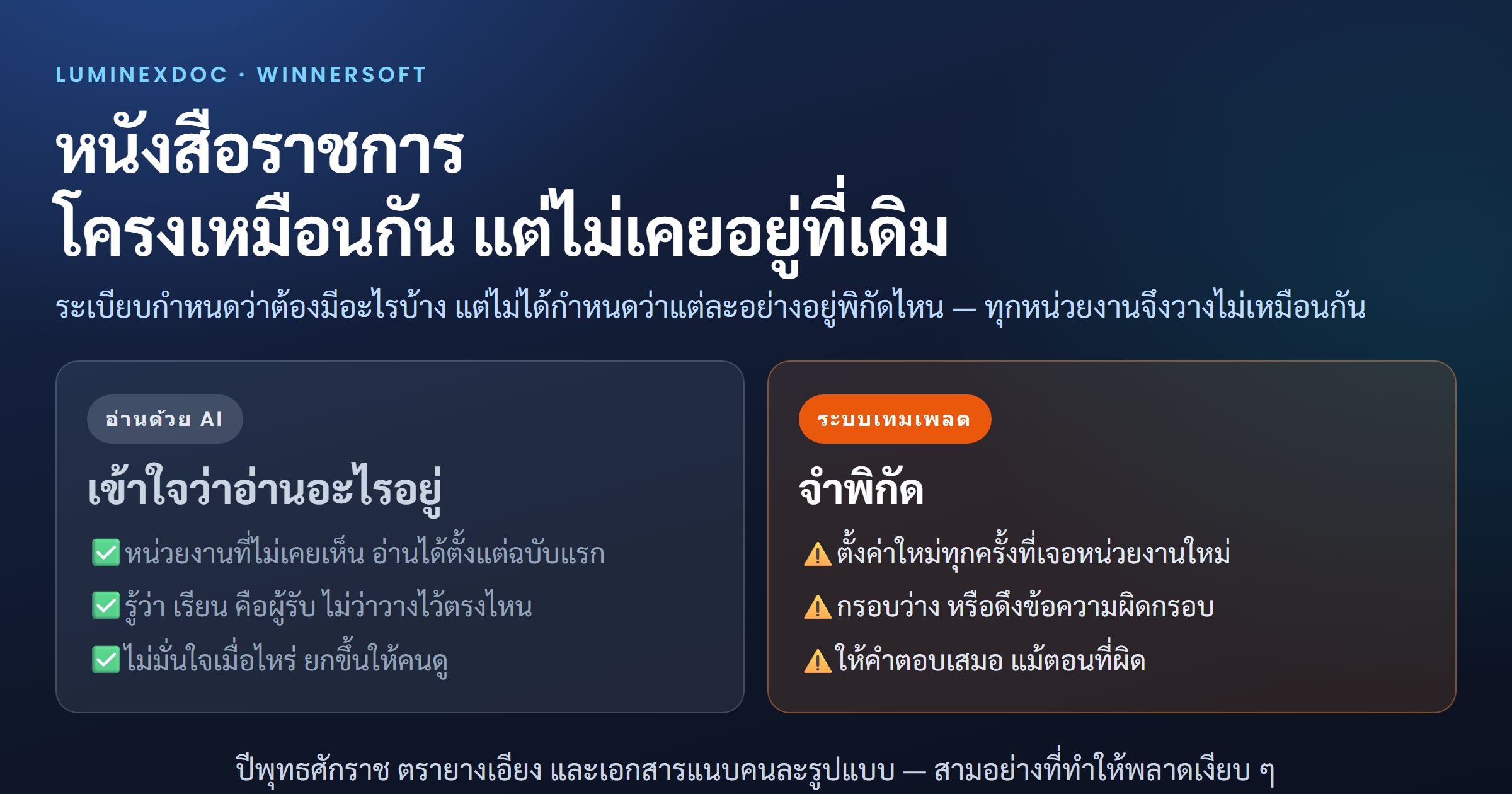
This separates old systems from new ones faster than any other question. Anything that works from position on the page needs a human to configure every layout, every time it changes. The largest cost in these projects is rarely the licence — it is the maintenance that grows every year.
If the answer is yes, you are buying an ongoing obligation, not a system.
2. Is that accuracy figure measured per character or per field?
A document holds roughly a thousand characters. 99% per character means about ten wrong per document. If those ten land in the total or the tax ID, the document is unusable. Character-level numbers always sound better and tell you far less.
Ask for field-level accuracy, then ask which document set it was measured on and how clean it was.
3. Does the system know when it is unsure?
Per-field confidence lets you set a rule for what passes automatically and what a person checks. That is where the time saving actually comes from, because people only review the documents worth reviewing.
A system that is always confident is a system you have to check entirely yourself.
4. Can the output post straight into the downstream system, or is it re-typed?
This is the least-asked question and the one that moves the result most. In a measured time study at an organisation running this in production, 89% of the saving came from the posting step — not from AI reading faster than a person.
If someone still re-types at the end, you have automated the smallest part of the job.
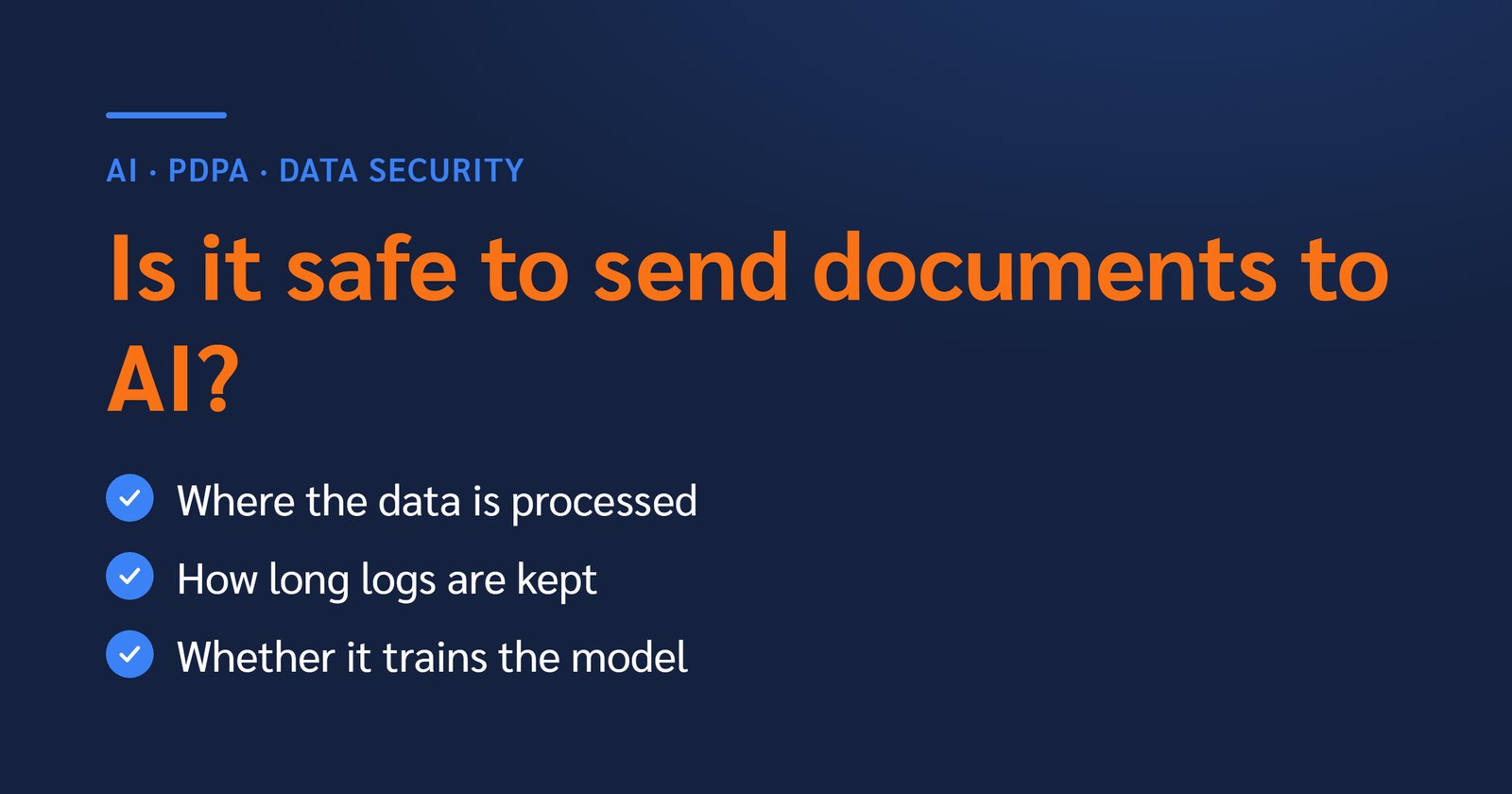
5. Where are our documents processed, and who can see them?
Tax invoices, contracts and purchase documents carry both counterparty data and commercial terms. Establish whether files leave your organisation, how long they are retained, whether they are used to train models, and whether an on-premises option exists.
A good answer is a verifiable fact, not a reassurance.
6. Can we test with our own real documents first?
This answer tells you the most. Real documents have signatures across fields, crooked stamps, skewed scans and layouts that never appear in a demo. A vendor willing to be tested on the real thing is a vendor who believes their own numbers.
A figure from a POC on your documents is worth more than every figure in the brochure.
7. If we leave, can we get the extracted data out?
Accumulated extracted data is your asset. Settle before signing whether it can be exported in a standard format, at what cost, and how long it takes.
This is the easiest question to ask before signing and the hardest one afterwards.
Which one matters most
Number four — and it is the least-asked of the seven.
Most people assume the time goes into reading the document. Reading is the smallest part. The time goes into taking what the document says and typing it into something else. If the new system does not remove that step, the saving will come in far below what was modelled.
How we answer these seven
LuminexDoc requires no templates, scores confidence per field so people review only what warrants it, cross-checks every field across three AI providers, and posts directly into SAP or your ERP.
On accuracy we say 95–98% is an LLM benchmark, not a guarantee on your documents. The real number has to be measured on real documents, which is why we propose a POC first — which is also our answer to question six.
If you want the number from your own documents, get in touch and we will set up a test.