Contracts hold the most expensive data an organisation owns — how much is committed, to whom, until when, and what happens on default. In practice, most of them are read closely exactly once, at signing, and then filed.
What gets filed away with them is the ability to answer plain questions: which agreements come up for renewal next month, or what we are committed to with this counterparty in total, without somebody opening folders one at a time.
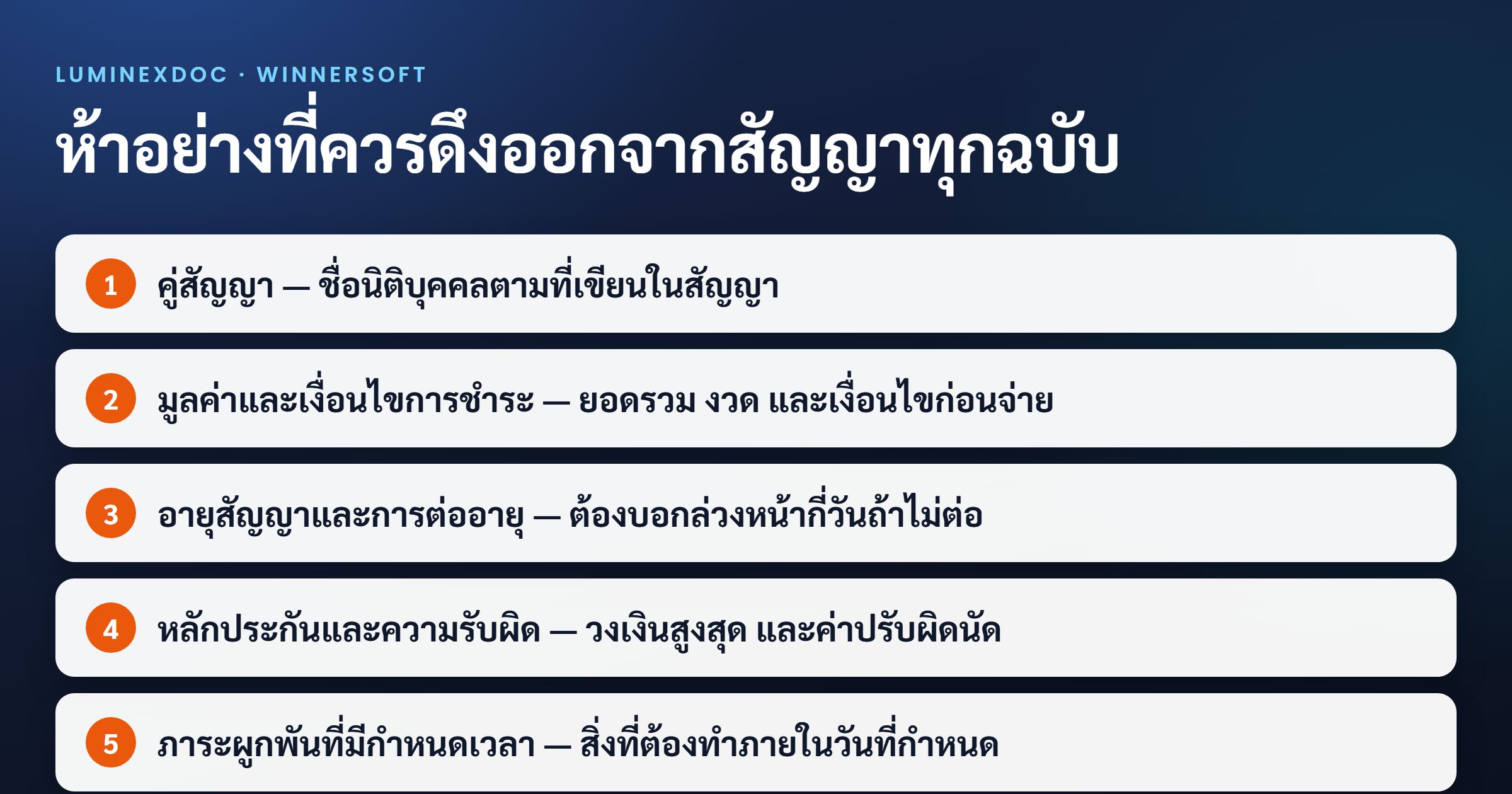
Five things worth extracting from every contract
- The parties — the legal entity names as written in the contract, not what people call them internally, because the name that binds is the one on the document.
- Value and payment terms — the total, the schedule, and what has to happen before a payment becomes due.
- Term and renewal — start date, end date, and more importantly how many days' notice is required to stop it renewing.
- Collateral and liability — bank guarantees, the cap on liability, and the penalty rate for late or non-performance.
- Dated obligations — what either side must do by a specific date: submit a report, renew insurance, notify of a change.
Four of those five carry a date. That is what separates a contract from an invoice: an invoice is finished when it is paid, while a contract stays alive for years. And the damage usually comes not from a number read wrong, but from a date nobody looked at again after signing.
Why contracts are much harder than invoices
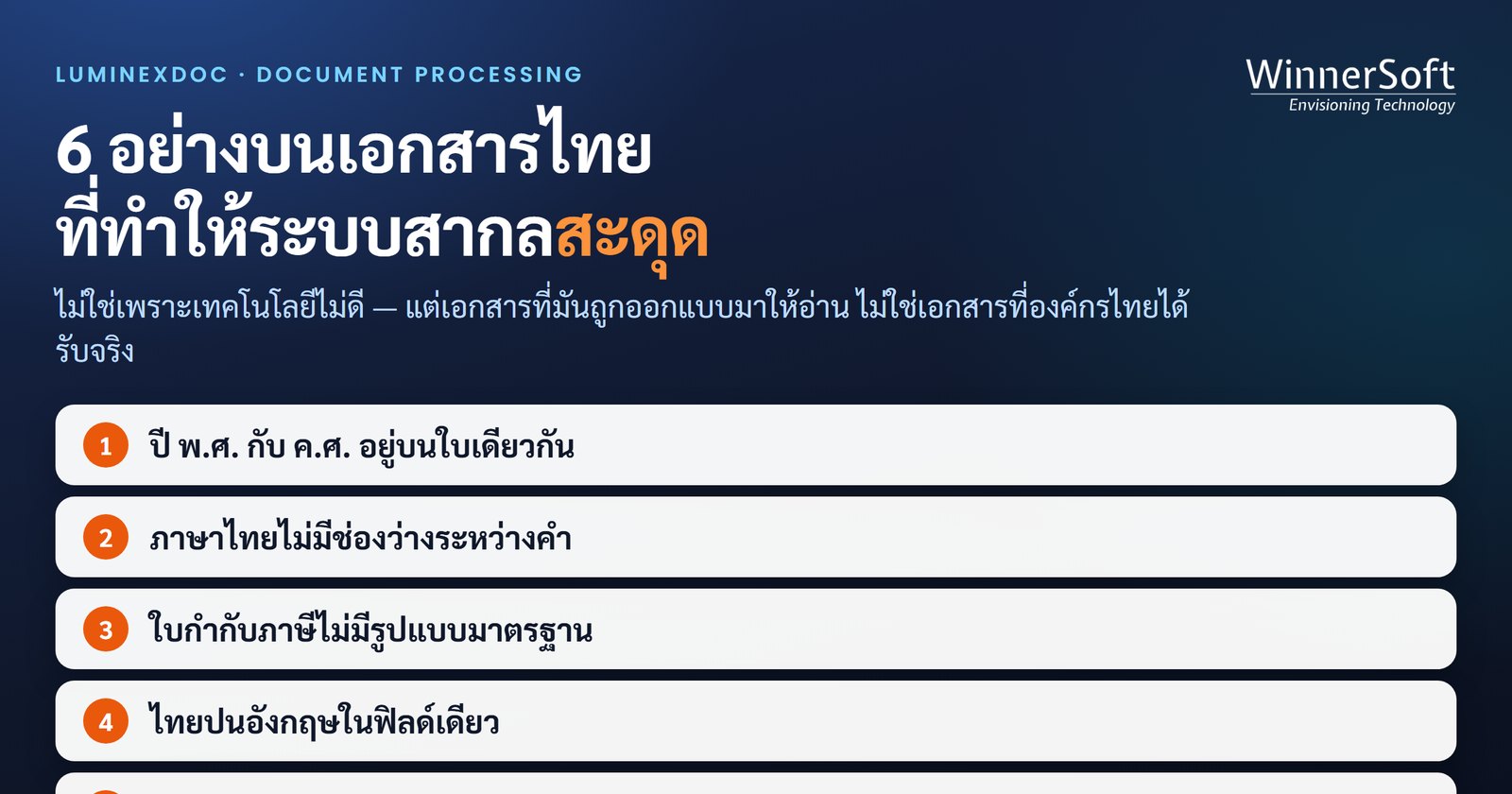
An invoice has a predictable shape. Suppliers lay them out differently, but the same set of facts is always present, and usually on one page. Contracts are not like that.
- There is no fixed layout. The clause that matters most may be on page 2 or page 14, and may have been amended by an annex kept somewhere else entirely.
- Meaning turns on conditions and negation. "Except where" or "unless" reverses a whole clause, and a system matching keywords will read the opposite of what the contract says.
- The same number appears in several places meaning different things. A guarantee amount and a contract value can sit near each other and be entirely different figures.
- Annexes and amendments override the original on specific clauses, so the system has to know which version it is reading.
- Cross-border contracts are often bilingual in a single document, and state for themselves which language governs in the event of conflict.
What we measured in our own testing
In testing on a live instance in July 2026, LuminexDoc read a Japanese-language contract with every field correct and all three AI models in agreement. That is a case a template system cannot handle at all, because no template for that contract existed beforehand.
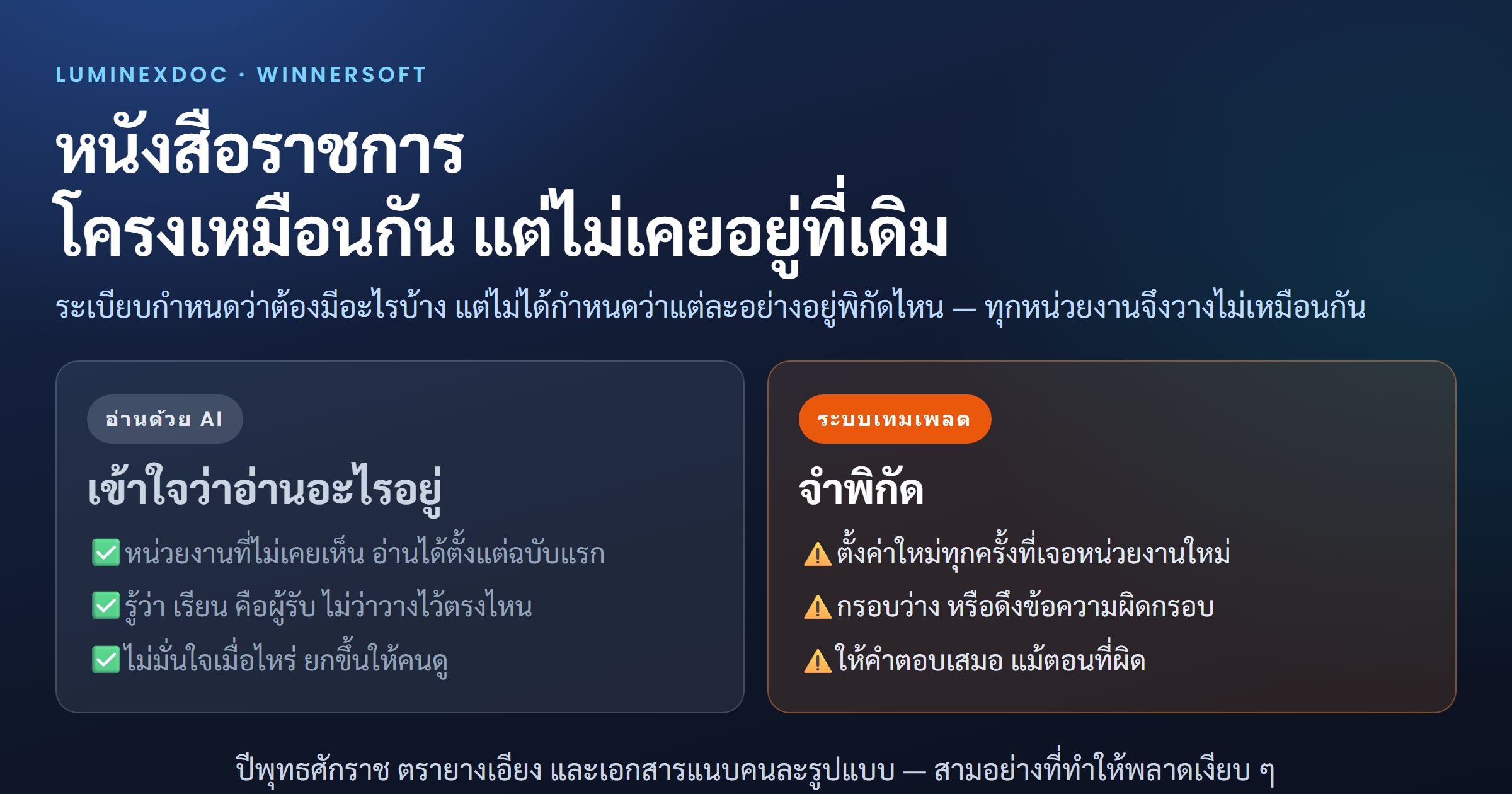
The mechanism matters more than the result. Every field is read by three AI models that cannot see each other's answers. Where all three agree, the field passes; where they disagree, it is raised for a person. In a document where one line read wrong means a commitment taken wrong, a system willing to say it is unsure is worth more than any accuracy figure.
Start from a question you cannot answer today
The most effective way to start is not to scan the whole cabinet. Pick one question you cannot answer within ten minutes today, and extract only the fields needed to answer it, from the contracts still in force.
The question most organisations pick first is renewal, because it has a deadline and missing that deadline has a cost you can calculate immediately — unlike broad benefits, which are harder to prove.
If you want to know how well this reads your own agreements, we start from your real contracts and measure on that set, not on a demonstration set.